The Messier Mission

The Messier Catalog contains 110 deep sky object. It's a popular list of targets for amateur astrophotographers. I'm very much an amateur and can barely be considered a "photographer" of any kind. So I suppose that's me!
Late last year I began pointing my camera skyward. Andromeda was my first target. One thing led to another and now I have a star tracker, a new lens, and a refractor on the way. Oops, I accidentally found another expensive hobby (Sorry, Molly).
This page tracks all the Messier objects I've captures so far. To make it on this page, the capture had to be at least somewhat intentional.
Gear
| Item | Name |
|---|---|
| Camera | Sony a7 IV |
| Lens 1 | Rokinon 135mm f2 |
| Lens 2 | Sony 50mm GM f1.4 |
| Tracker | Star Adventurer 2i |
Process
Most of these were processed with a combination of Siril, Photomator, and Lightroom. Stellarium mobile to find the things.
M31 - The Andromeda Galaxy
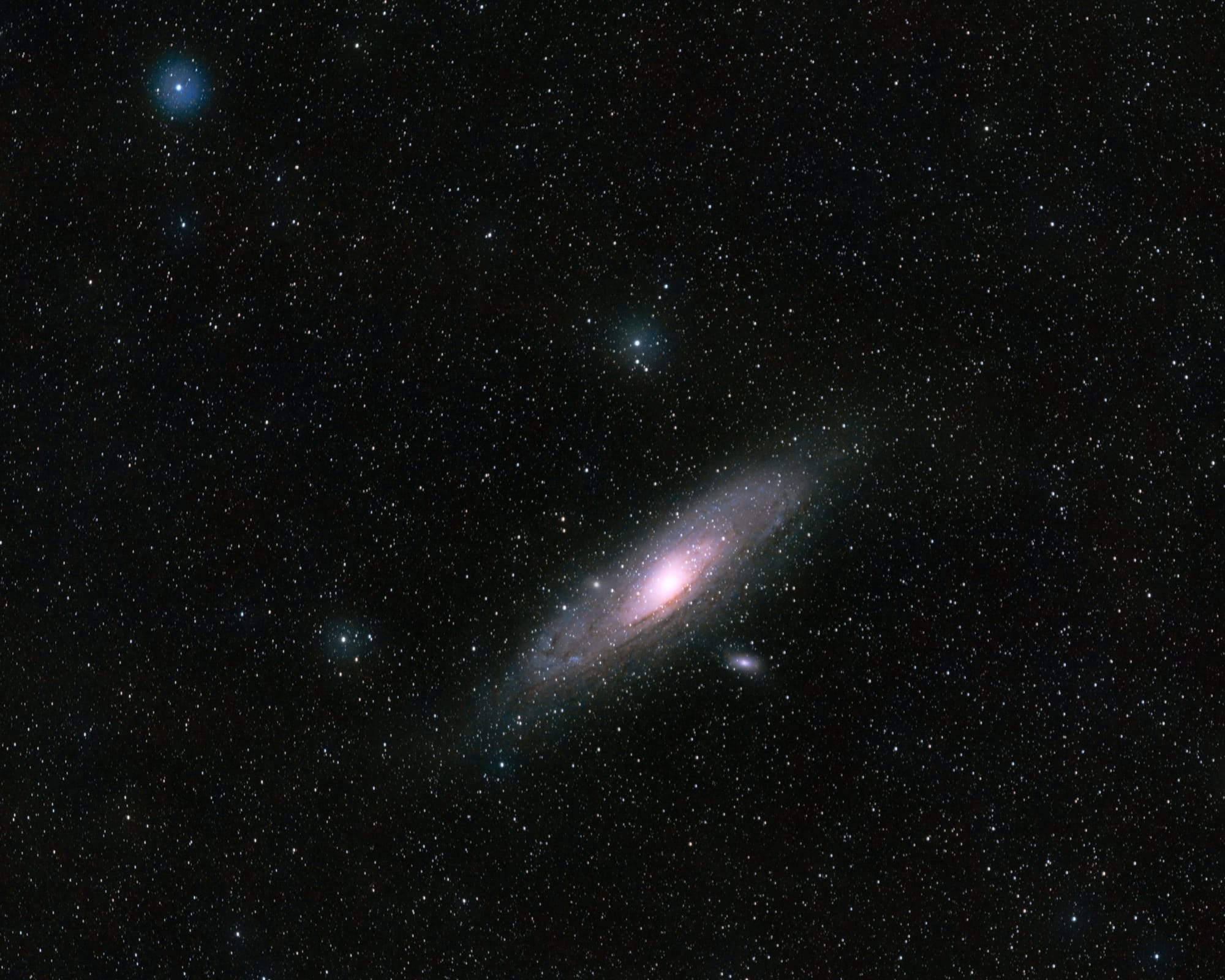
November 2025
Rokinon 135mm @ f2
11 minutes of integration, untracked, 3.2s subs
A couple of nights of trial and error and I finally had my first real stack. Solid shot given the gear I had at the time. I'm looking forward to trying this one again in 2026 now that I've learned a lot more.
M32 & M110 - Andromeda Satellites
In the above image, there's a smudge on the underside of Andromeda. That's M110! The final entry in the Messier catalog.
There's an ever harder to distinguish bright smudgey dot to the left of the core and just on the edge of the ring. That's another galaxy, M32.
Both orbit Andromeda. 3 birds, one stone.
M33 - The Triangulum Galaxy
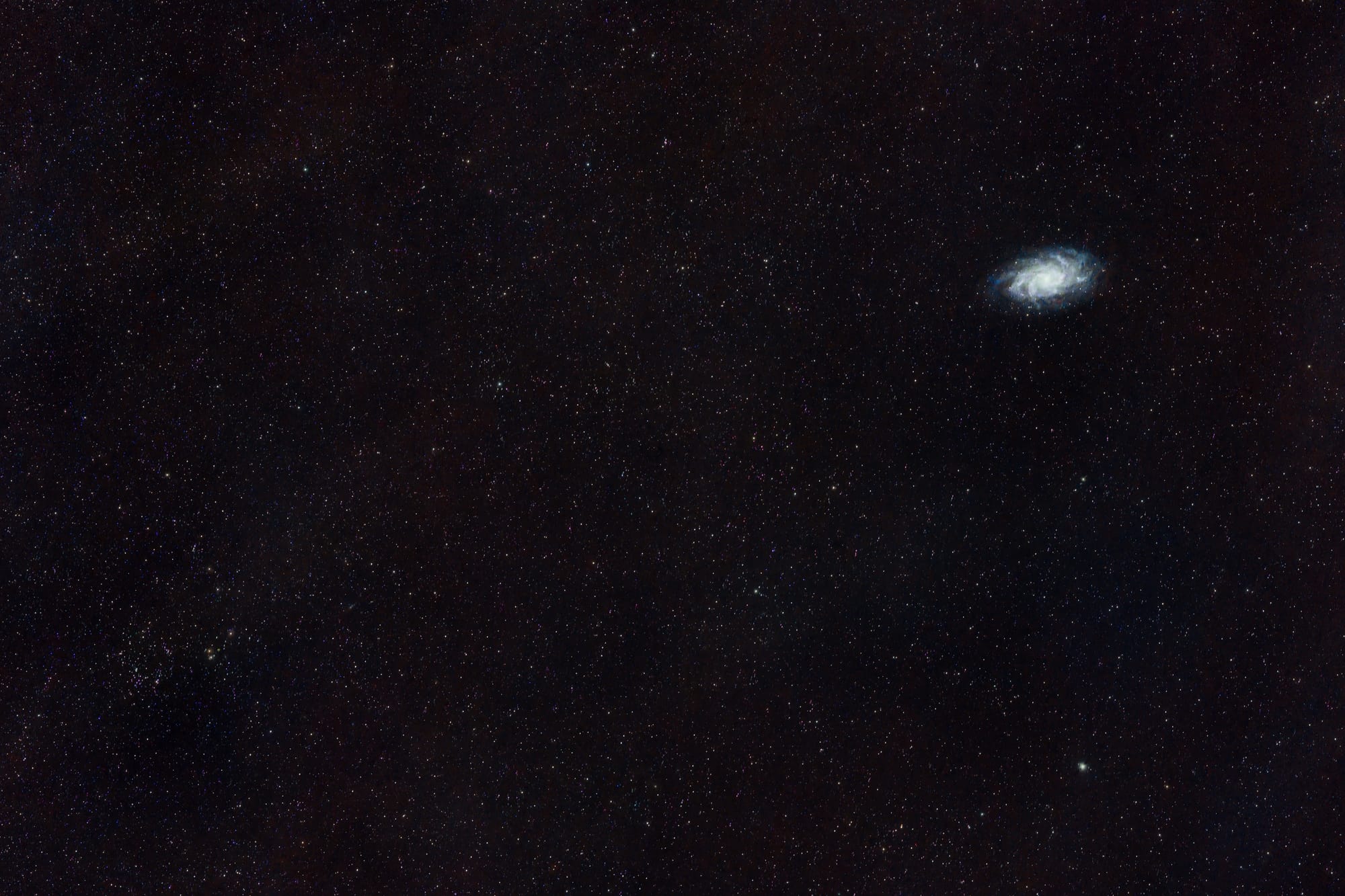
November 2025
Rokinon 135mm @ f2
7.6 minutes of integration, untracked, 4s subs
This was just a test shot to see how large the Triangulum Galaxy appeared at 135mm. With a heavy crop, it's alright. Now that I have a tracker, I want to do a real attempt at this, maybe framing the Triangulum constellation and the galaxy in the same shot.
M42 & M43 - The Orion Nebula
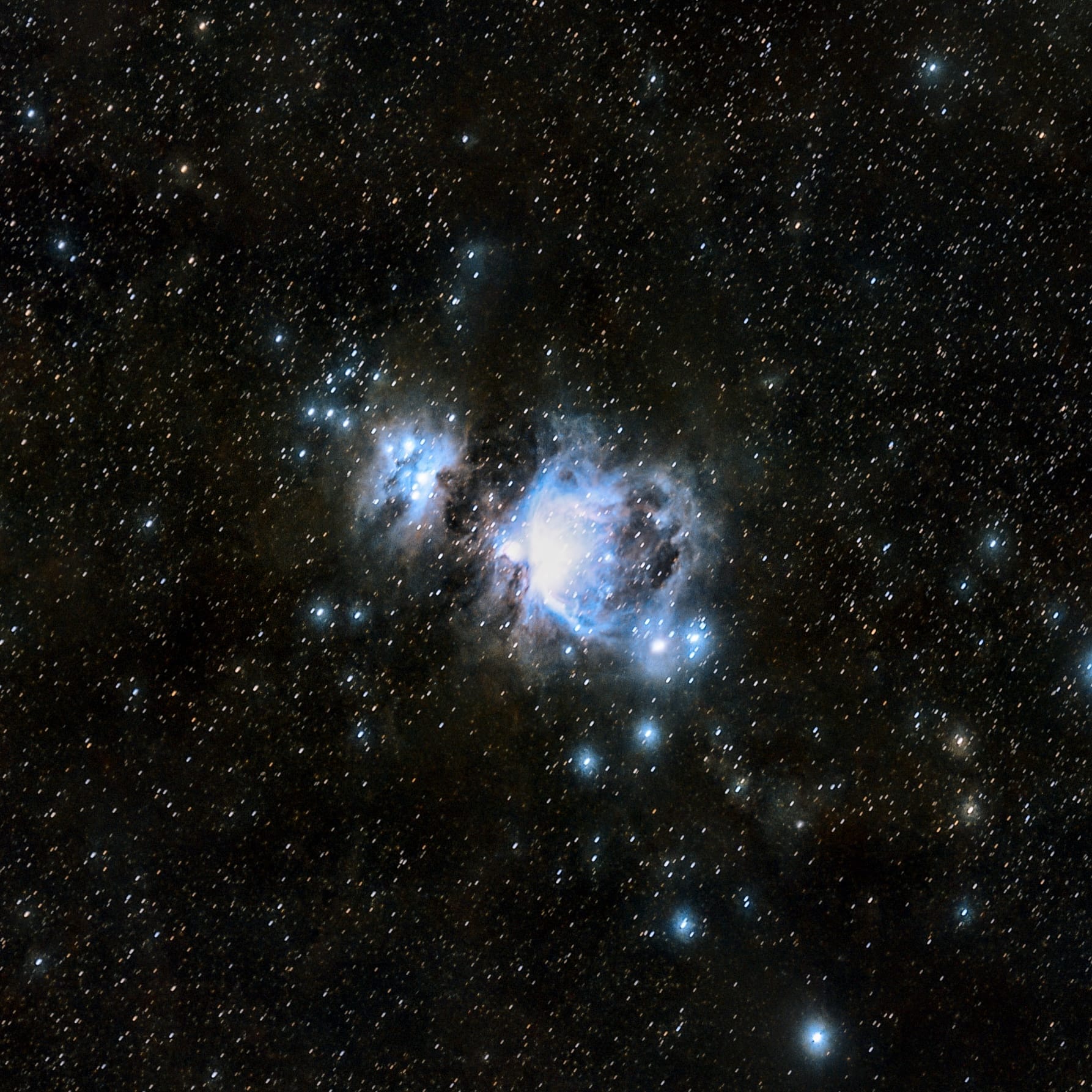
November 2025
Rokinon 135mm @ f2
10 minutes of integration... It felt like so much more at the time. 3.2s subs. Untracked was a pain.
Part of a much wider Orion molecular cloud photo. This is another I'd really like to devote more time to now that I have a tracker and A LOT more processing experience. I hope to shoot for hours, not minutes.
M44 - The Beehive Cluster
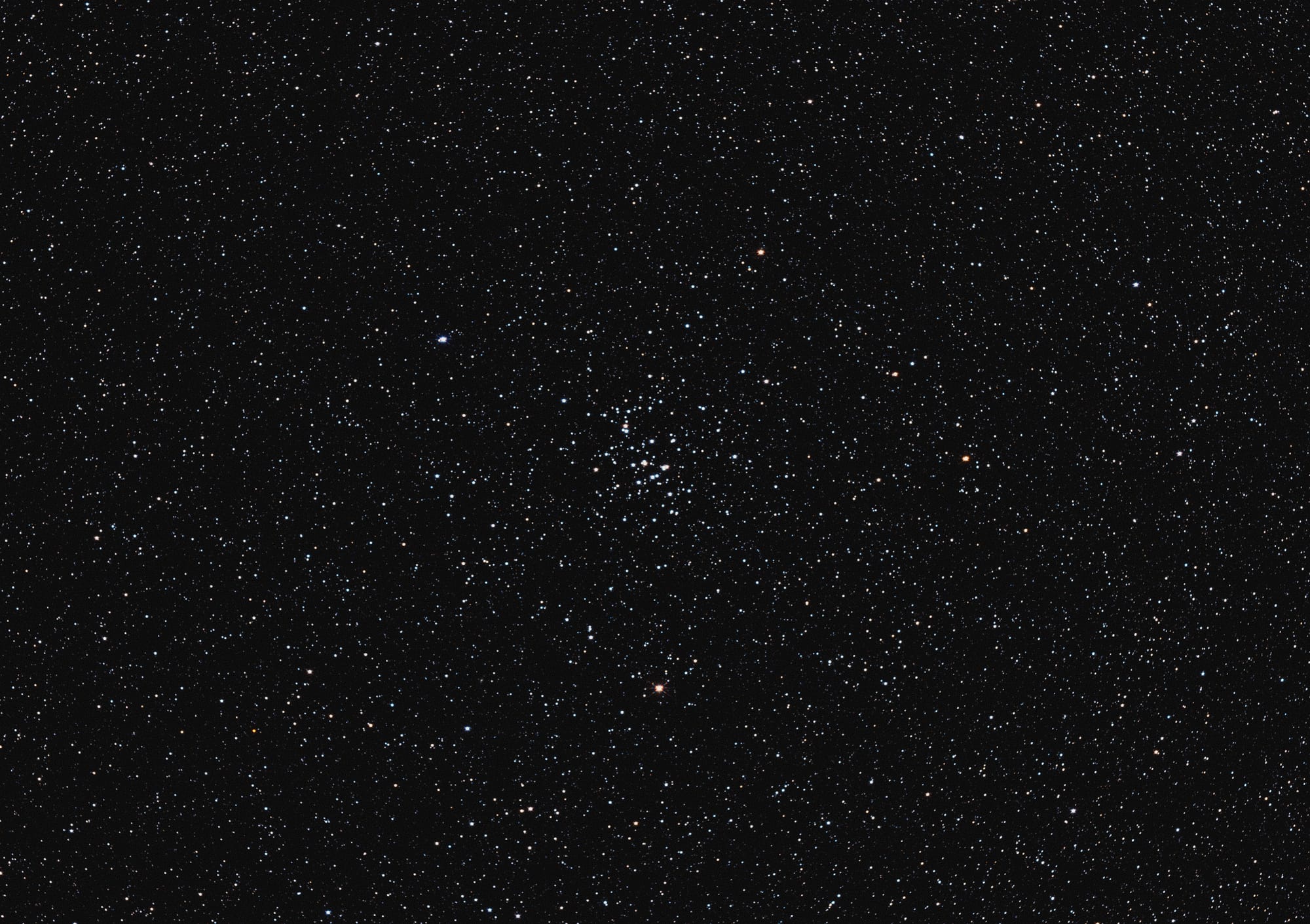
March 2026
Rokinon 135mm @ f 2.4
46 minutes of integration. I was aiming for a few hours, but the clouds rolled in and ruined it. Although, I'm kind of thankful they did. There's not much here that would have been improved by more integration time.
Look closely and you'll notice some diffraction spikes on the brightest stars. I wanted to test out a diffraction mask I made and figured this cluster would be a good target. It wasn't. Still a good learning exercise for tracking and processing.
M45 - Pleiades
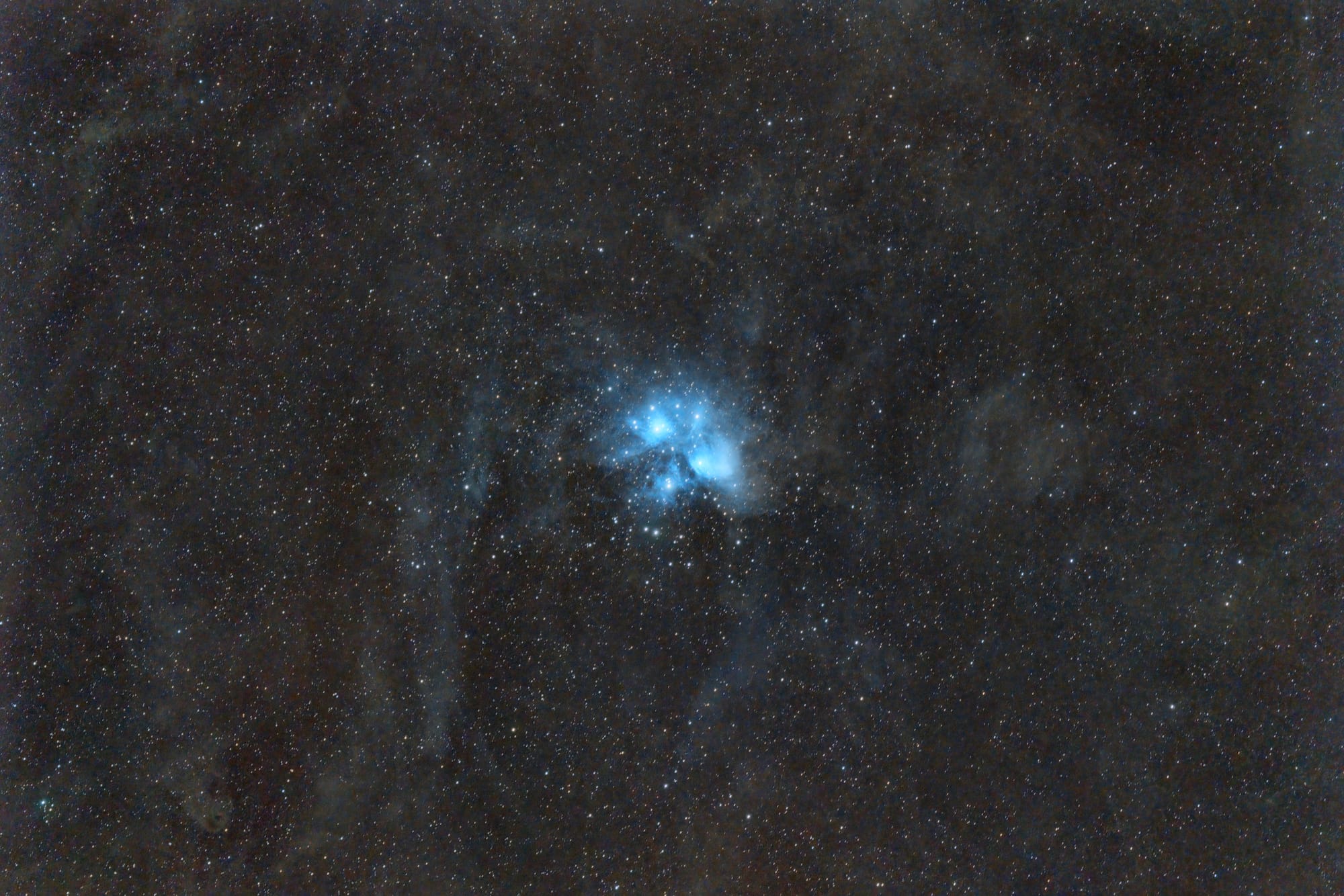
November 2025
Rokinon 135mm @ f 2.4
37 minutes of integration
This one really pushed the 3.2s untracked process. I had to stop when I filled my old 64GB memory card, then nearly filled my computer's entire drive while processing. I had to run inside, transfer files, then run back out to grab dark frames. Still, this one turned out pretty great given the constraints in both knowledge and gear. I'm surprised at how much of the faint Taurus molecular clouds I was able to capture.
37 minutes of integration time felt like a long time back then. This was the one that pushed me to start researching star trackers. Because, wow. Look at all those wispy clouds. If I could get that with just 37 minutes, what could I get with 3-7 hours? ...it also pushed me to get a new memory card and switch to Fedora for most of my astro processing, but that's a story for another time.
M49, M58, M59, M60, M84, M86, M87, M88, M89, M90, M91, M99, M100
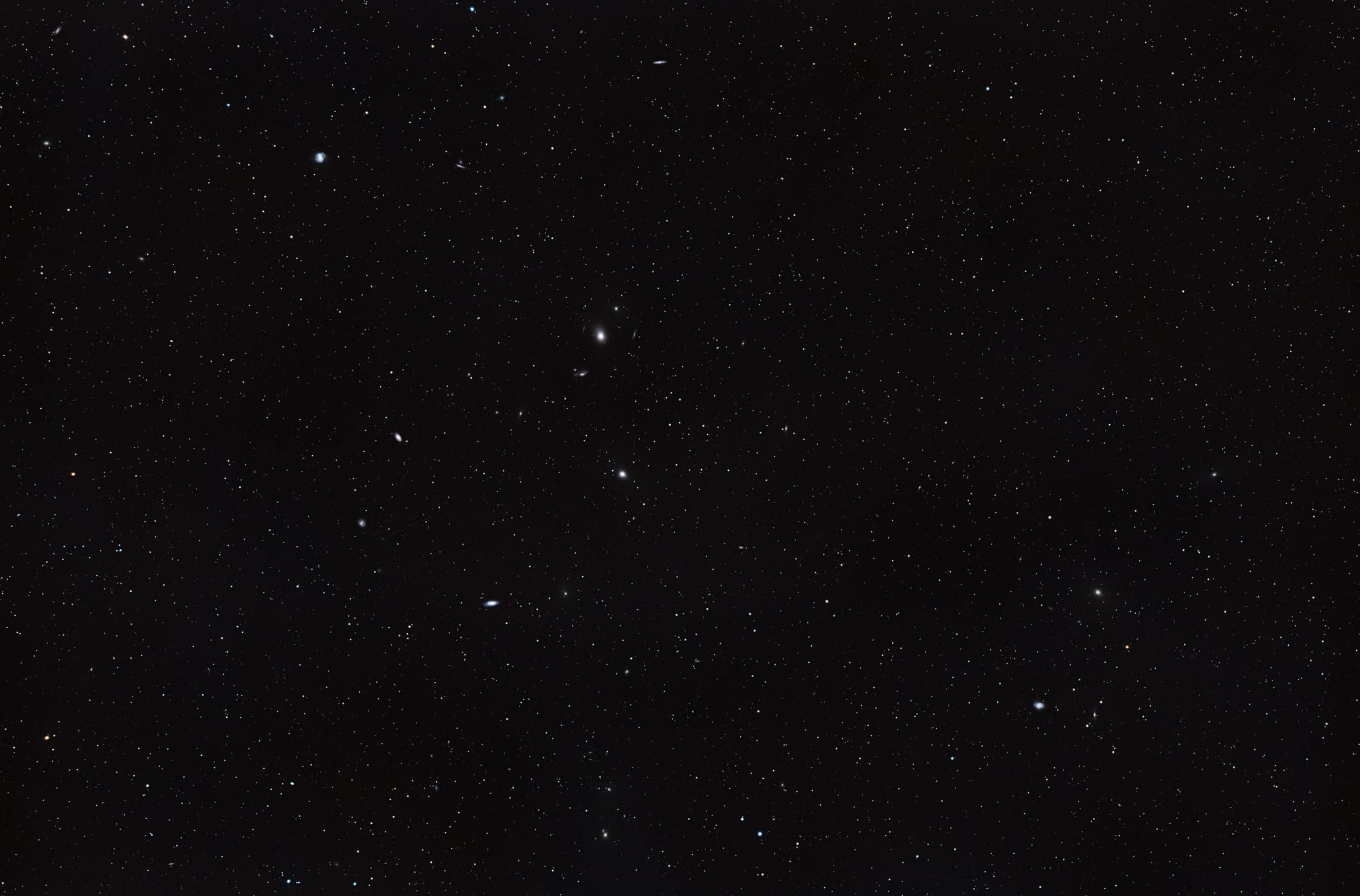
March 2026
Rokinon 135mm @ f 2.4
2 hours of integration. 30 second subs.
That's right. 14 Messier objects in one shot! The Virgo Cluster is the ultimate bang for your buck. I don't blame you if you can't spot them all in the image above. Here's an annotated version:
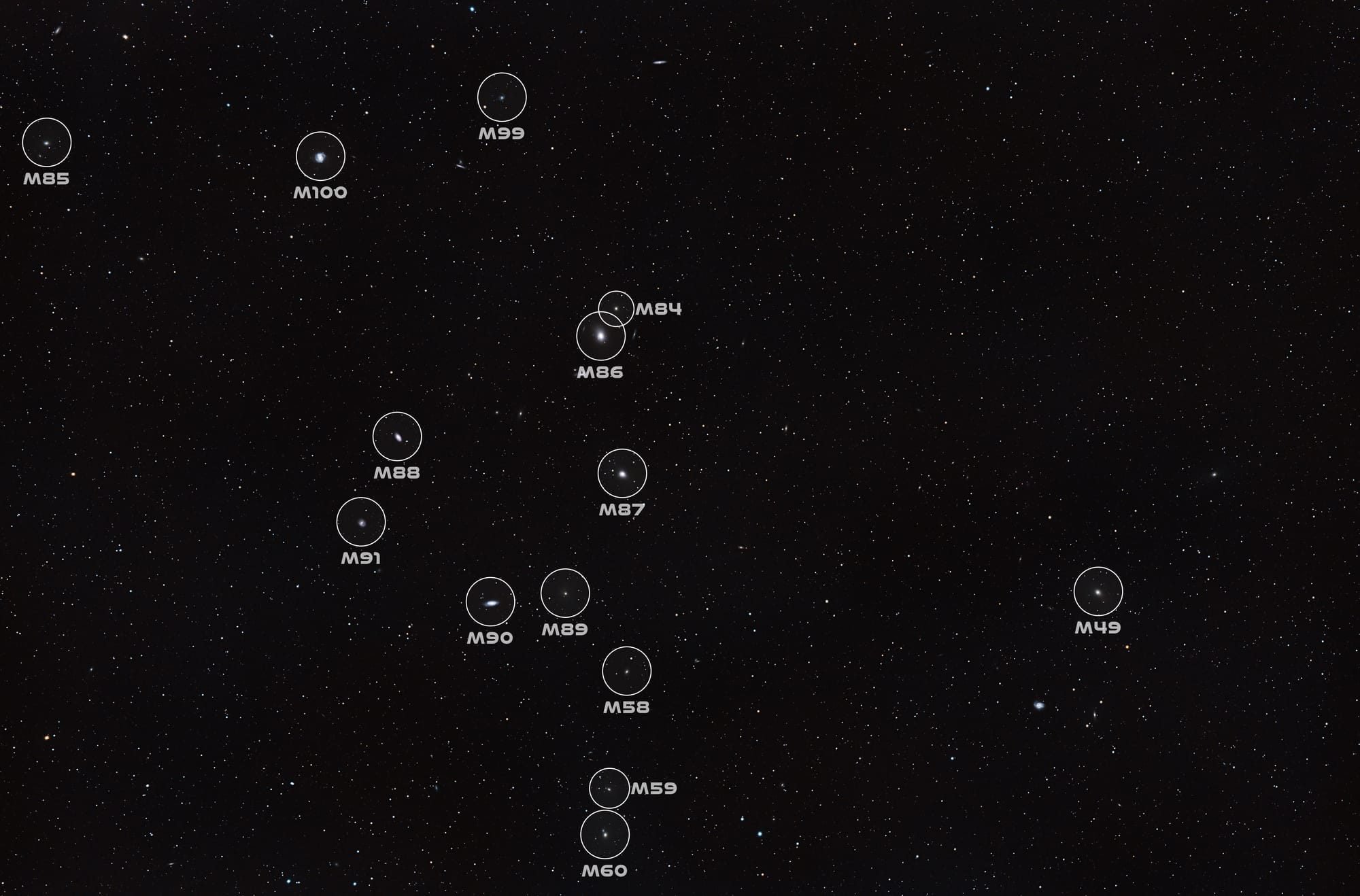
Galaxies galore! I have spent hours just scrolling through the uncompressed version of the above photo and googling the galaxies I find. Here's the photo annotated with the NGC:
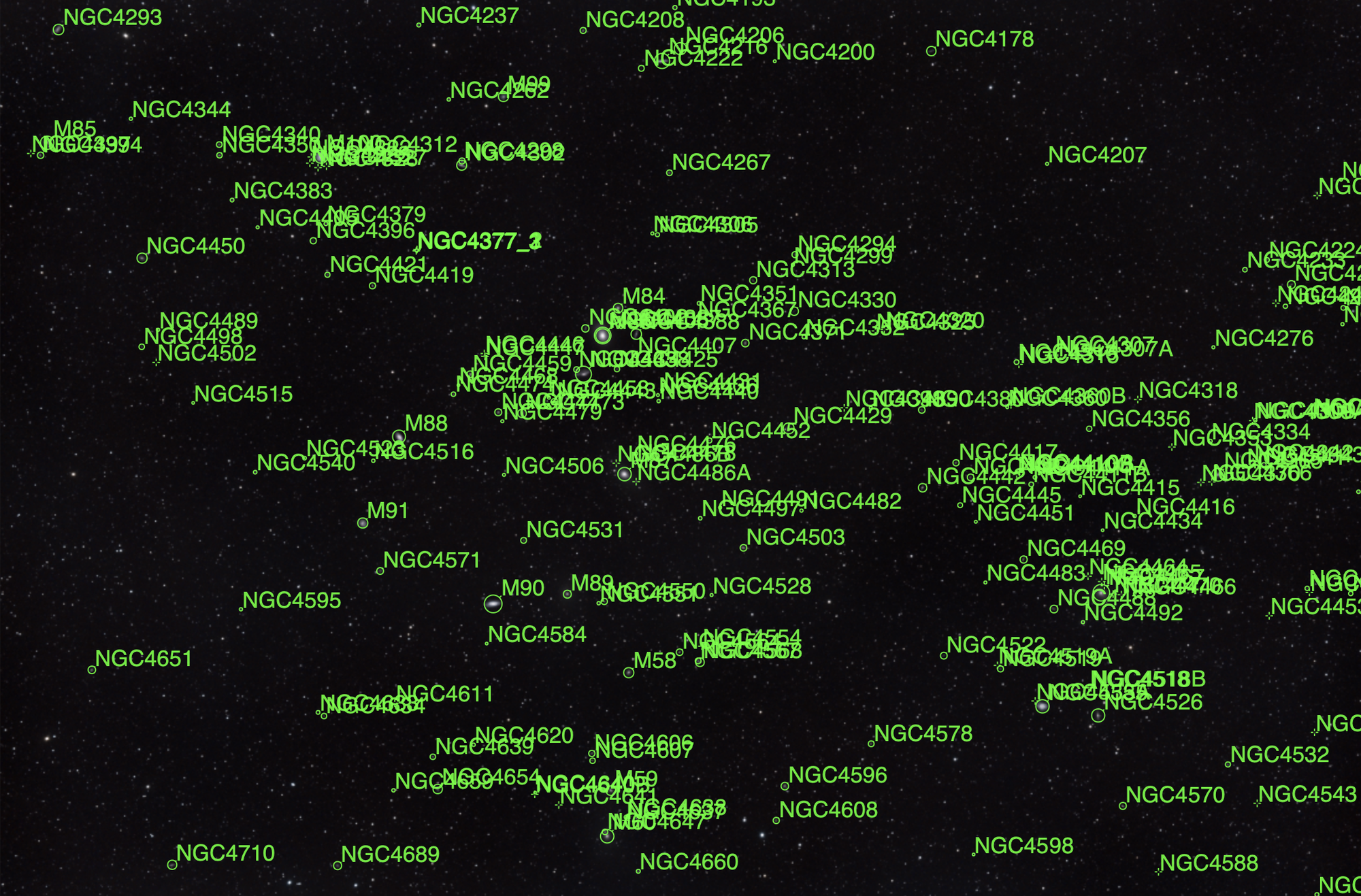
Those are all galaxies. Each contain about 100 billion stars. Most stars have planets. How many weird little aliens are out looking up at us and wondering the same thing? Probably at least one. Mathematically, probably about 200 billion worlds that could support life, just in the galaxies highlighted in this photo.
Maybe we're actually really small. Maybe we should stop bombing each other or something. Maybe we should stop destroying our planet so we can meet those weird little aliens. Or at the very least, continue to live on the only world we've ever known and probably will ever know, for all time.
Sorry. Back to cool space stuff.
M65 & M66
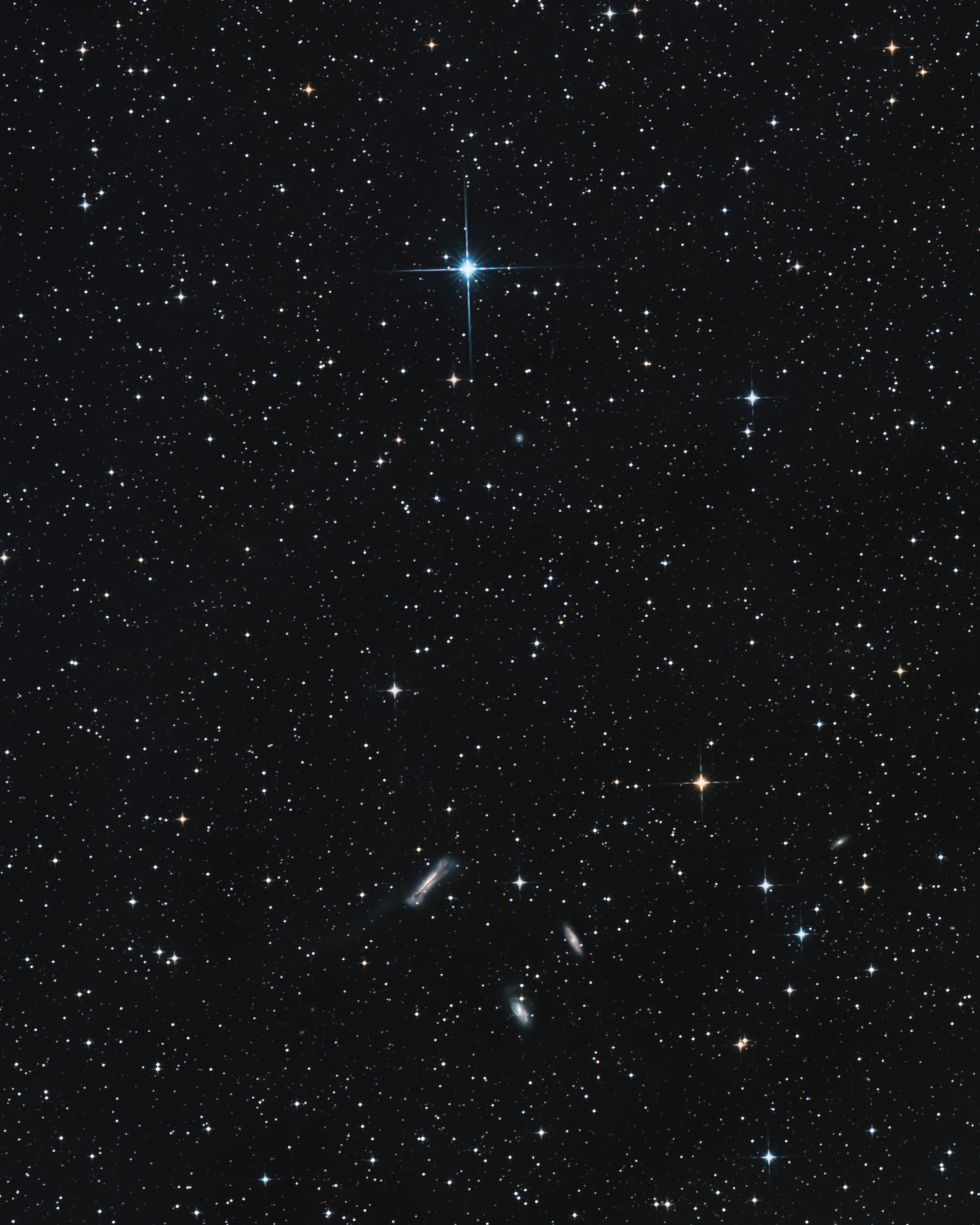
March 2026
Rokinon 135mm @ f 2.4
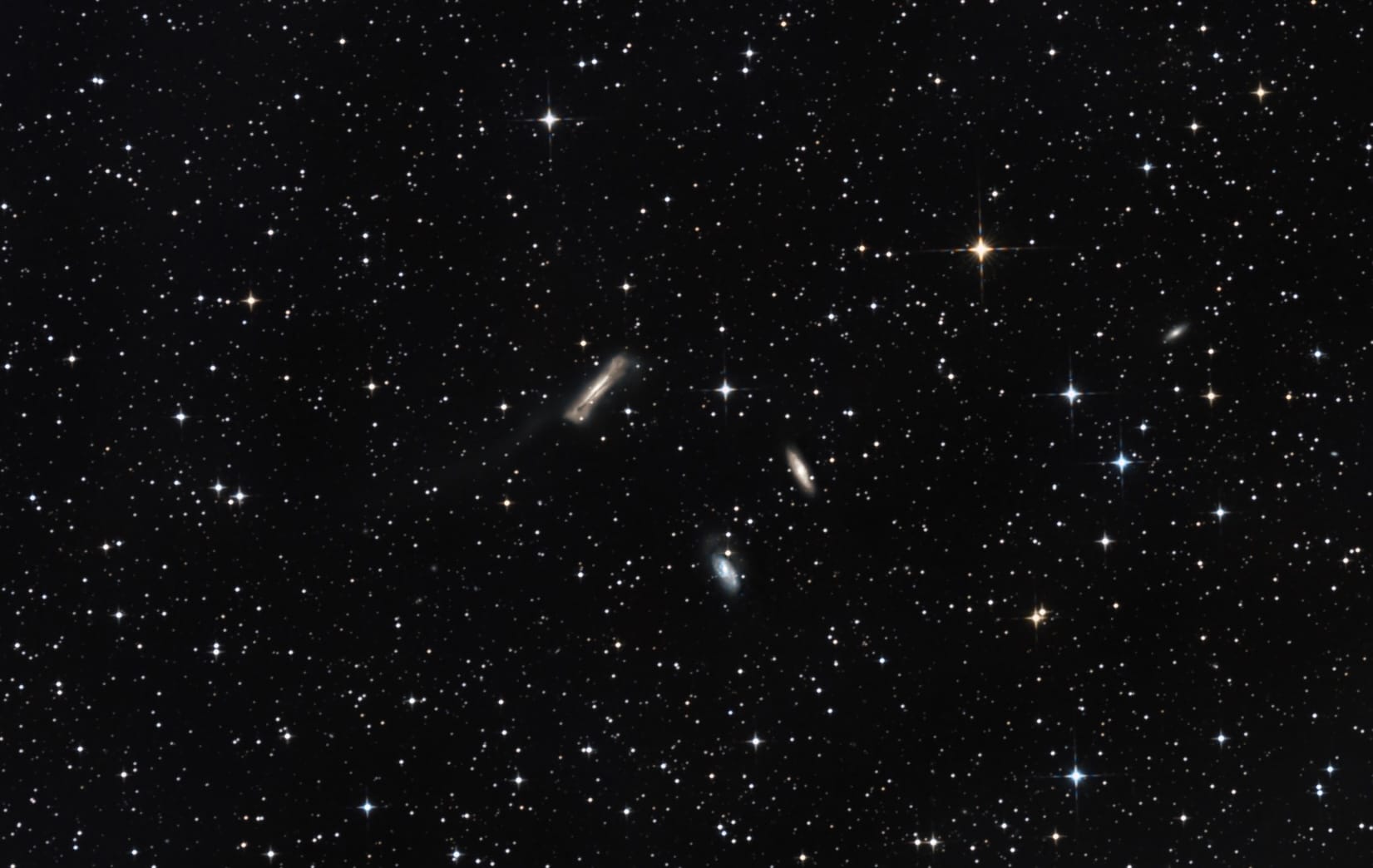
5 hours of integration
30 second subs
4 point diffraction mask
It's me. I'm the weird little alien. Dare I say... This photo is actually pretty good. :)
These two, plus NGC 3628 form the Leo Triplet. M65 is the one on the right, M66 is the one on the bottom. The left-most galaxy in the triplet is referred to as the "Hamburger Galaxy" which I find incredible. Astronomers must be a hungry bunch.
M78
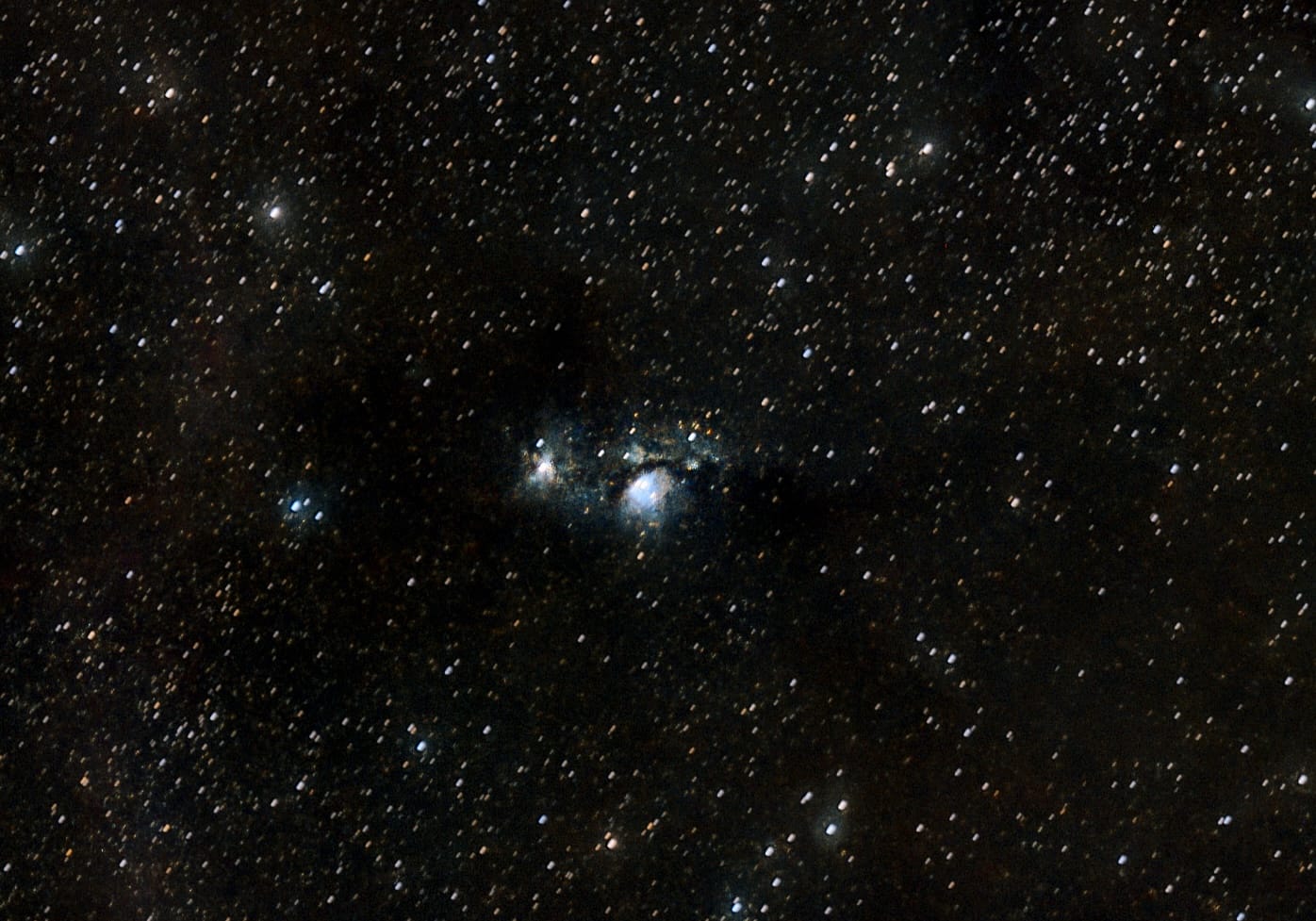
Part of the same Orion molecular cloud photo above. This reflection nebula is tiny at 135mm so you're looking at a very heavy crop.
To Be Continued
Questions? Comments? Concerns? Just want to chat? My public profiles are on Mastodon and Bluesky.